
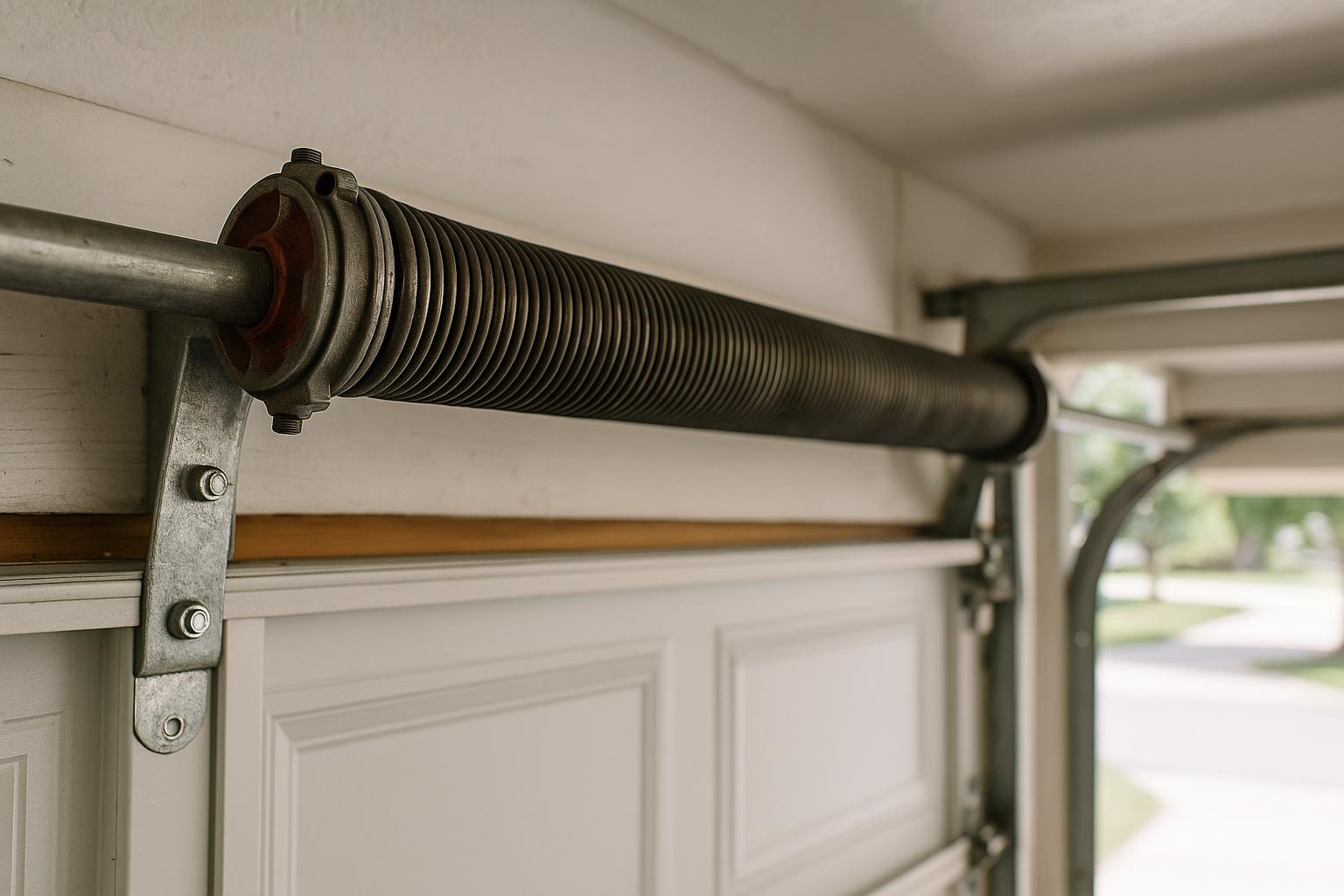
Your Garage Door Springs Are Working Harder Than You Think
Every time you open and close your garage door, the springs do the heavy lifting — literally. A standard residential garage door weighs between 130 and 350 pounds, and the springs bear almost all of that weight. Most homeowners in Chelsea never think about their garage door springs until the day one snaps, leaving the door stuck and their morning routine derailed.
The good news is that failing springs almost always give warning signs before they break completely. If you know what to look for, you can schedule a replacement on your terms instead of dealing with an emergency. Here's what every homeowner should watch for.
Understanding the Two Types of Garage Door Springs
Before we get into the warning signs, it helps to know which type of springs your garage door uses:
- Torsion springs — These are mounted horizontally above the garage door opening. They use torque to lift the door and are the most common type in modern residential installations.
- Extension springs — These run along the horizontal tracks on either side of the door. They stretch and contract to provide lifting force. They're more common in older homes and lighter doors.
Both types have a limited lifespan, typically measured in cycles. One cycle equals one full open-and-close of the door. Most standard springs are rated for about 10,000 cycles, which translates to roughly 7 to 10 years for the average household.
7 Warning Signs Your Garage Door Springs Are Failing
1. The Door Feels Heavier Than Usual
Try this simple test: disconnect your garage door opener by pulling the emergency release cord, then manually lift the door about halfway. A properly balanced door should stay in place on its own. If it feels unusually heavy or slides back down, your springs are losing tension and struggling to support the door's weight.
2. The Door Opens Unevenly or Crooked
If one side of your garage door rises faster than the other, it often means one spring has weakened more than its counterpart. This uneven movement puts extra strain on the opener, the tracks, and the remaining spring — accelerating wear on all of them.
3. You Hear Loud Squeaking or Grinding
Some noise during operation is normal, but new or worsening squeaking, popping, or grinding sounds can indicate that springs are corroding, losing lubrication, or developing stress fractures. If your garage door has suddenly become the loudest thing on your street, don't ignore it.
4. Visible Gaps in the Spring Coils
Take a look at your torsion spring above the door. A healthy spring has tightly wound coils with uniform spacing. If you notice a visible gap or separation between coils, the spring has stretched beyond its intended limits and is close to breaking.
5. The Door Slams Shut or Closes Too Fast
Springs control the speed at which your door closes. When they lose tension, the door can drop faster than it should, which is both a safety hazard and a sign that failure is imminent. This is especially concerning for families with children or pets in Chelsea neighborhoods where kids play near open garages.
6. The Opener Strains or Stops Working
Your garage door opener is designed to guide the door — not lift its full weight. When springs weaken, the opener has to compensate, which can cause it to overheat, trip its safety mechanism, or stop working entirely. If your opener suddenly seems underpowered, the springs may be the real problem.
7. Rust and Corrosion on the Springs
Michigan weather is tough on metal components. The freeze-thaw cycles, road salt tracked into garages, and seasonal humidity swings we experience in Chelsea and the surrounding areas all contribute to spring corrosion. Rust weakens the metal and reduces the spring's effective lifespan by thousands of cycles.
Why You Should Never Replace Garage Door Springs Yourself
We understand the DIY spirit — it's strong in communities like ours across Chelsea, Dexter, and Manchester. But garage door springs are one of the few home repairs that professionals universally recommend leaving to the experts. Here's why:
- Extreme tension: Torsion springs are wound under tremendous force. A spring that releases unexpectedly can cause serious injury or even death.
- Specialized tools required: Proper spring replacement requires winding bars, clamps, and calibration tools that most homeowners don't have.
- Incorrect installation risks: A spring that's the wrong size or improperly wound will cause uneven door movement, premature wear on other components, and potential safety hazards.
A trained technician can typically complete a spring replacement in under an hour, and the cost is modest compared to the risk of a DIY attempt gone wrong.
How to Extend the Life of Your Garage Door Springs
While springs will eventually wear out no matter what, a little preventive care can add years to their lifespan:
- Lubricate the springs twice a year — Use a silicone-based or white lithium spray on the coils in spring and fall. This reduces friction and helps prevent rust.
- Schedule annual maintenance — A professional inspection catches early signs of wear before they become expensive problems. We recommend scheduling maintenance in early spring after the harsh Michigan winter.
- Keep your garage temperature stable — If possible, insulate your garage door and walls. Extreme temperature swings stress metal components and accelerate fatigue.
- Upgrade to high-cycle springs — When it's time for replacement, consider investing in springs rated for 25,000 or even 50,000 cycles. The upfront cost is slightly higher, but they can last two to five times longer than standard springs.
- Balance the door regularly — Perform the manual lift test described above every few months. Catching an imbalance early prevents cascading damage to other parts of the system.
What to Do When a Spring Breaks
If a spring does snap, here's what to do:
- Do not try to open the door. Operating the opener with a broken spring can damage the opener, bend the tracks, or cause the door to fall.
- Disconnect the opener using the emergency release cord to prevent accidental activation.
- Call a professional. A qualified technician can safely remove the broken spring and install a properly sized replacement.
At Chelsea Garage Door, we respond quickly to spring failures because we know a stuck garage door disrupts your entire day. Whether you're in Chelsea, Grass Lake, Stockbridge, or Saline, we'll get to you promptly and get your door working safely again.
Don't Wait for the Snap
A broken garage door spring is one of the most common service calls we handle, and in most cases, the homeowner tells us they noticed something was off weeks or months before the break. Taking action at the first warning sign saves you money, protects your family, and keeps your daily routine running smoothly.
If any of the signs in this article sound familiar, give Chelsea Garage Door a call. We'll inspect your springs, give you an honest assessment, and help you decide whether it's time for a replacement — before the decision is made for you.