
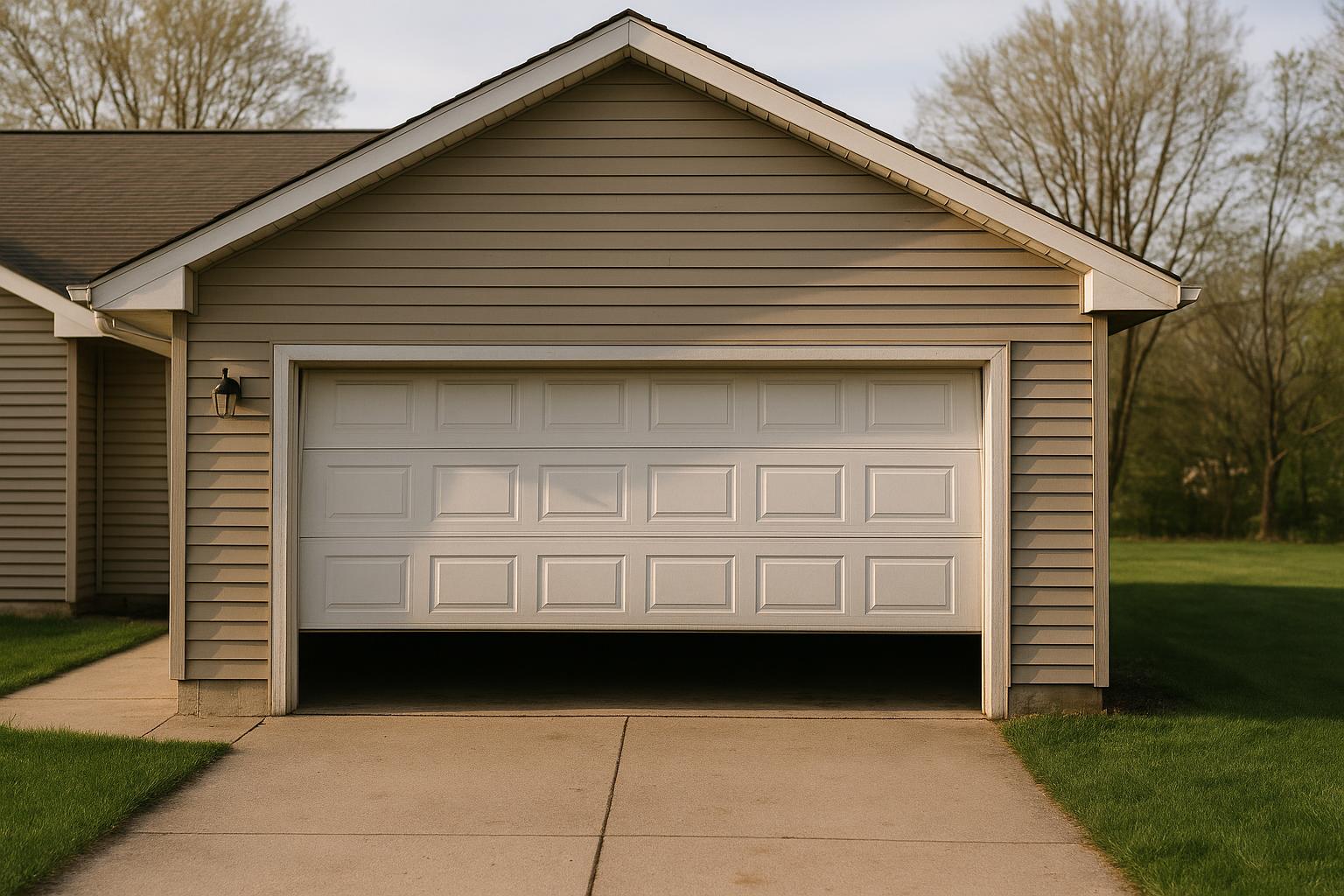
When Your Garage Door Refuses to Close
You press the button on your remote or wall switch, the motor hums, and your garage door starts to move — then stops, reverses, or doesn't budge at all. It's one of the most common garage door problems homeowners in Chelsea deal with, and it always seems to happen at the worst possible time.
A garage door that won't close isn't just an inconvenience. It's a security concern, an energy efficiency problem, and in Michigan's unpredictable weather, it can leave your garage and everything inside it exposed to rain, snow, and freezing temperatures. The good news is that many of the causes are straightforward, and some you can even troubleshoot yourself before calling a professional.
Let's walk through the most common reasons your garage door won't close and what to do about each one.
1. Something Is Blocking the Safety Sensors
Every garage door manufactured after 1993 is required to have photoelectric safety sensors — small devices mounted near the floor on either side of the door opening. These sensors send an invisible beam across the doorway, and if anything breaks that beam, the door won't close. It's a critical safety feature designed to prevent the door from closing on a person, pet, or object.
This is the single most common reason a garage door refuses to close. Here's what to check:
- Look for obstructions. A broom, a trash can, a bicycle tire, even a leaf pile — anything in the sensor's path will prevent the door from closing. Clear the area and try again.
- Check for dirt or cobwebs on the sensor lenses. A quick wipe with a clean cloth often solves the problem instantly.
- Make sure the sensors are aligned. If one sensor has been bumped or shifted, the beam won't connect. Most sensors have a small LED light — typically green when aligned and red or blinking when misaligned. Gently adjust the sensor until both lights are steady.
If you've checked all of these and the sensors still aren't cooperating, the wiring may be damaged or the sensors themselves may need replacement. That's a job for a garage door technician.
2. The Remote or Wall Switch Has a Problem
Before assuming the worst, try operating the door from both the remote and the wall-mounted button. If the wall switch works but the remote doesn't, the issue is likely a dead battery in your remote or a signal interference problem. Replace the batteries first — it's a surprisingly common fix that people overlook.
If neither the remote nor the wall switch works, check your circuit breaker. A tripped breaker means no power to the opener, and no power means no operation. Reset the breaker and try again.
3. The Close-Limit Switch Needs Adjusting
Your garage door opener has limit switches that tell it how far the door should travel when opening and closing. If the close-limit switch is set incorrectly, the opener may think the door has hit the ground before it actually has, causing it to reverse back up.
This often happens after a new opener installation or after someone has adjusted the settings. Most openers have limit adjustment screws on the back or side of the motor unit. Consult your owner's manual for specific instructions. Small adjustments — usually a quarter turn at a time — can make a big difference.
If you're not comfortable making these adjustments yourself, a professional can dial in the settings quickly. Here in Chelsea, our team handles this type of adjustment regularly.
4. The Tracks Are Misaligned or Obstructed
Your garage door travels along metal tracks on both sides. If those tracks become bent, dented, or misaligned, the door can bind or get stuck partway through its travel. The opener's safety system will detect the resistance and stop or reverse the door.
Visually inspect the tracks for:
- Visible bends or dents
- Gaps between the track and the rollers
- Debris like small rocks, leaves, or ice buildup (especially common during Chelsea winters)
Minor debris can be cleared easily. However, if the tracks are bent or out of alignment, do not try to force the door closed. Operating a door on damaged tracks can cause further damage to the door panels, rollers, and opener. Call a professional to assess and repair the tracks safely.
5. Broken Cables or Worn Rollers
Garage door cables work in tandem with the springs to control the door's movement. If a cable has snapped or come off its drum, the door may close unevenly, get stuck, or refuse to move at all. You might notice the door hanging at an angle — one side lower than the other.
Worn or broken rollers can cause similar symptoms. When rollers deteriorate, they create friction and resistance that the opener can't overcome. You may hear grinding, squealing, or popping sounds when the door tries to move.
Both cable and roller repairs should be handled by a trained technician. These components are under significant tension, and attempting a DIY repair can result in serious injury.
6. The Opener's Force Settings Are Too Low
Garage door openers have adjustable force settings that control how much power the motor uses to open and close the door. If the close-force setting is too low, the opener may not have enough power to push the door all the way down, especially if the door is heavy or if there's increased friction from cold weather or worn parts.
Like the limit switches, force adjustments are usually made with screws on the opener unit. Again, small adjustments are key. If you increase the force too much, the door could close with excessive power, which defeats the purpose of the safety features.
7. The Door Itself Is Damaged
Sometimes the problem isn't mechanical — it's structural. A warped, cracked, or damaged door panel can prevent the door from sitting properly in the tracks. This is particularly common after a vehicle has bumped the door or after severe weather. If you notice visible damage to the panels, it's worth having a professional evaluate whether the panel can be replaced or if the entire door needs to be upgraded.
When to Call a Professional
Some of the fixes above — clearing sensor obstructions, replacing remote batteries, resetting a breaker — are simple enough for any homeowner to handle. But when the issue involves tracks, cables, springs, or opener adjustments you're not confident making, it's time to call in a pro.
Working on a garage door without the right tools and training can be dangerous. The door is the largest moving part of your home, and its components operate under high tension.
At Chelsea Garage Door, we help homeowners across Chelsea, Dexter, Manchester, Grass Lake, Stockbridge, and Saline diagnose and fix these problems every day. We show up on time, explain what's going on in plain language, and get your door working properly — usually in a single visit.
Don't Ignore a Door That Won't Close
A garage door stuck in the open position is an open invitation for theft, pests, and weather damage. It also puts extra strain on your opener if you keep trying to force it. The sooner you identify and address the problem, the less likely it is to turn into a bigger, more expensive repair.
If your garage door won't close and you've exhausted the simple fixes, give us a call. We're local, we're experienced, and we're here to help.